Wednesday, March 16, 2016

Xiaomi Mi 4i Review

Xiaomi mi4i Review

Performance is as smooth as expected, but understandably not as fast as what you’d get with far more expensive flagships. The device handles gaming very well, and multi-tasking is also a breeze. The MIUI 6 OS is quite memory-intensive though, leaving users with just over 1 GB of memory on boot. Xiaomi said that they worked closely with Qualcomm to ensure that the device doesn’t overheat, and luckily, there were no issues with this review unit. It does get warm when performing processor-intensive tasks for a long time, but not uncomfortably so, or any more than what would happen with any other smartphone out there.
The back isn't technically removable, but the Mi 4i is pretty easy to disassemble with the right tools. When we went to pick one up, Xiaomi's VP of International Hugo Barra stripped a Mi 4i down to the motherboard with nothing other than a plastic pry tool and a Phillips screwdriver.

Apple dari Tiongkok ini mempercayakan baterai berkapasitas 3120 mAh pada Mi4i, atau 120 mAh lebih besar dibandingkan Zenfone 2. Tak heran, ketahanannya pun lebih mumpuni. Walau tak bisa pula dikatakan unggul.

Sunlight Display technology is not just used to liven up images, but also to alter UI elements. The background colour of the on-screen keys, for example, changes to make characters easier to see in different lighting conditions. Though most won't consciously notice the Sunlight Display's effects in action in real life, it's safe to say that the Xiaomi Mi 4i has the best display in its class, and it is perhaps the highlight of the device.

MIUI does have one or two advantages over stock Android. It already has a kind of selective permission system—you can set to have an allow/deny pop-up show up for access to your location, contacts, camera, and other device features. There are also lots of customization options, along with a theme system. Google will be catching up to MIUI with a selectable permissions system (along with lots more developer support) in Android M.

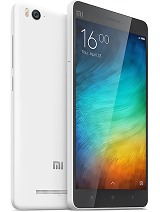
The Zenfone 2 looks very similar to the original Zenfone series (4,5 and 6) complete with curved back, plastic body and metal chin but sports a bigger 5.5-inch display. The removable plastic back panel sports a brushed metallic finish; the volume rocker is on the back, the same way it is in LG’s top-end G series. The smartphone's power key is at the top making it a little cumbersome to use. Asus Zenfone 2 measures 152.5x77.2x10.9mm.Xiaomi Mi 4i's nearly 5-inch display is placed comfortably in a 138x69.6x7.8mm compact, unibody frame, almost similar to Apple iPhone 6. The power and volume rocker keys are also placed at the right edge for easy reach. The main frame is made of a steel alloy while the body panel is polycarbonate. Xiaomi is initially selling the white coloured, matte finish variant of the phone that looks and feels nice.In terms of looks and build quality, Xiaomi Mi 4i would appeal to people who prefer a phone offering one hand-use and don’t have an issue with the plastic body. The Zenfone 2 offers a more metallic look, is not large despite the big screen but the placement of the keys is a bit odd.

The Xiaomi Mi 4i ships with the latest MIUI 6, based on Android 5.0.2 Lollipop, even if you will be hard-pressed to find a lot of material design elements in the user interface. MIUI is certainly one of the heavier Android skins, but does add quite a lot to the overall software experience.

Everything looked sharp to my eye; fonts were crisp and colors were vibrant. It's certainly not the cheap low-end panel found on most budget phones that come with bad viewing angles. On the contrary, Xiaomi's display uses IPS technology and has a 178-degree viewing angle. This means the screen can be easily viewed from from the sides as well (which is great for sharing). Xiaomi claims that the screen is capable of rendering 95 percent of the NTSC color gamut, and while I'm no expert, things looked great to my eye.

The only minor build quality items we'll complain about are the buttons. To start, the volume and power buttons have a cheap-looking glossy silver paint. They don't jiggle much and the action is just fine, but it's easy to scratch the paint.

02.24.16 6 02.24.16 in Mobile Xiaomi's latest mid-range phone is a sequel to the popular Mi 4 It's quite nice, but we're still aching for the Mi 5. By C. Velazco, 02.24.16 View

Ron Amadeo Here's a good shot of the plastic exterior, which wraps up around the sides and surrounds the phone's glass. Ron Amadeo The back is a flat, smooth, hard sheet of plastic. Ron Amadeo The hardware buttons. Why is there still a menu button? Pressing the button doesn't actually open a menu; it opens the recent apps page. Ron Amadeo The top face of the device houses the speaker and front-facing camera. Ron Amadeo The rear camera has a 13MP sensor and a dual-tone flash Ron Amadeo Holes are drilled out for the speaker. We'd rate the speaker at "medium" loudness. It's adequate but didn't blow us away. Ron Amadeo The micro-USB port is one of those funky rectangular "A/B" ports. Ron Amadeo The side buttons are made of a shiny silver plastic that isn't very impressive. This is a minor issue, though.

RatingOur RatingBattery8.0Display9.0Camera8.0Software9.0Design9.0Bottom LineDespite some misleading marketing, its excellent design and build quality, gorgeous display, impressive battery life, good cameras, and feature-packed software experience makes the Xiaomi Mi 4i a fantastic mid-range device, available at a very affordable price point.8.6Our RatingYou have rated this

Engadget Summary If you ever thought to yourself, "I really like the iPhone's design but wish it ran Android," Xiaomi has you covered. The Mi 4 is the latest phone from the Chinese manufacturer, showcasing a sharp design and their signature MIUI interface. Even with a mediocre camera and buggy experience, it still ticks all the right boxes to be a viable alternative to other flagship phones -- as long as it supports your carrier's bands. The overall design and feel of the Mi 4 were well received despite an uninspired design that reminded critics of the iPhone. Ars Technica says the phone's "impeccable construction makes this the best Android hardware we've seen all year," while CNET says they "like the feel of the phone" as it sits "comfortably" in their hands. The frame houses a 5-inch 1920 x 1080 pixel display that Android Authority finds "vibrant" and Mobile Geeks calls outright "fantastic." However, PocketNow had issues with the display's "warm" picture and "side visibility," which they say can "taper-off" at certain angles. The camera of the Mi 4 is a mixed bag, where as Android Authority calls it "unremarkable" and Ars Technica finds the photos "a little on the warm side," CNET was "impressed" by its performance and Mobile Geeks even managed to get some shots that were "simply stunning." Xiaomi's real standout feature is the MIUI Android skin, offering a bevy of customization features. Ars Technica says it's "ridiculously fast" in spite of all the changes, even finding it "faster than stock Android." Unfortunately as this is a phone aimed at the Chinese market, there are a lot of places that went untranslated. PocketNow also found a "darker side" to MIUI, noting quite a few "quirks, bugs, and glitches." However, Xiaomi recently put out an update that hopefully squishes a few of those bugs. Should you buy the Mi 4? It depends. If you're looking for a well-designed phone with a totally different Android experience, and it will work with your carrier, then sure. Keep in mind that Google Play is not loaded on here, so it'll need to be side-loaded. If that's not the kind of user experience you're looking for, there are plenty of other options offering more familiar and accessible experiences.

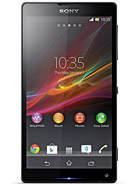
Sony Xperia ZL Review

Sony Xperia ZL Review

You will find a 13-megapixel main camera on the back of the ZL, along with an LED flash. Also here are a small speaker and a door that provides access to both SIM card and microSD card slots. The phone's 2,370mAh battery is embedded, however, so it's officially hands-off -- you can't replace it.

This is another area where Sony’s position as a consumer electronics giant comes in handy. The 13-megapixel rear-facing camera benefits greatly from the settings and options culled from the company’s cameras, particularly the Superior Auto mode. It quickly assessed lighting conditions and other factors and switched to the correct mode. If you don’t want to leave it up to Auto, the app offers a ton of scene modes for almost any situation. The Xperia ZL’s pictures are good but not great. HDR mode doesn’t balance out shadows and light as well as the Galaxy S4 or HTC One, and the edges and details aren’t as crisp. Night mode produced surprisingly good pics in low light considering the shutter isn’t very fast. Burst mode increased speed but the moving objects are full of blur. Overall, images are fine for sharing online, though they won’t look all that great on a giant HDTV screen or when printed.

We'd also remind you that the operative term here is "head-on." As with the Xperia Z, the ideal viewing angles on the ZL are considerably narrower than on the Droid DNA and most other devices this size. Look askew at the LCD to any significant degree and colors will quickly wash out, invert or otherwise deviate from their intended hues. We continue to wonder how a company known for pushing the limits of TVs can't crack the mystery of wide viewing angles in mobile when considerably smaller rivals like HTC or ZTE have fared better with screens they frequently outsource to part suppliers.

Beyond that, Sony's implementation of their own user interface has proven itself to be swift and responsive as it should be, doing the processor under the hood justice. This Qualcomm SoC also lends itself to a long battery life: more info on that below.

Spin the phone around and you'll find some other elements in familiar and usually easy-to-reach places, including the volume rocker in the top right, the machined-aluminum power button at center right and the headphone jack at top. Unfortunately, this also means that the micro-USB socket is at the top-left corner, rather than the bottom. That may be partly forgiven since there's a two-stage camera button at the bottom right, something we'd sorely missed on the Xperia Z. The 13-megapixel camera on the back (with LED flash) also appears more safely recessed this time, and Sony still manages to stuff in that uniquely bottom-mounted, front-facing 2-megapixel camera despite the narrower chin.

Oh boy! You mean to say sales is directly proportional to design? Samsung Galaxy phones get sold because of three main reasons: The flagship S series' hardware i.e, brutal processing power and the software features that come along. The entry-level and mid-range phones of Samsung are pretty cheap compared to other OEMs' phones making most of the people to opt for them. The smartphone market is flooded with zillion number of variants of Samsung phones. So an average user, who has no technical knowledge, has higher chances of getting a Samsung phone compared to other OEMs. As a matter of fact, the design of Galaxy phones including the flagship S series has always been under scrutiny.

Both Xperia Z and ZL have got MicroSD slot, Smartypants. The hype you mentioned was always about Xperia Z and yes, it does manage to live up to the expectations with its sleek and glassy design, water and dust resistant ability barring the not-so-good camera and poor contrast.

Get the best tech deals, reviews, product advice, competitions, unmissable tech news and more! No spam, we promise. You can unsubscribe at any time and we'll never share your details without your permission.

The speaker on the back pumps surprisingly loud and decent audio for a smartphone, and listening to music via the headphones is a great experience. With the Xperia ZL, Sony is reminding everyone that they once ruled portable music and currently sit atop an entertainment empire. Thus you can easily mirror the phone and the media content on it to a Sony Bravia TV or pair and connect NFC-enabled Sony headphones and speakers with a tap. From within media apps it’s easy to “Throw” a song, image, or movie to another compatible device. In a perfect world all these features would work with any modern entertainment gadget. At least Sony is attempting a unified ecosystem so that their own products work together without hassle.

A key addition for 2013 is Stamina mode, which extends battery life by preventing apps from quietly sipping data while the phone's screen is asleep. You can make exceptions for applications that truly demand real-time updates, whether it's email or a favorite social network, and anything in mid-progress will run until it's finished. Sony's power-management section provides an estimate of just how long you'll last on standby in whichever setting you use, although it's wildly optimistic about the Stamina mode's impact: an estimate of one day and three hours in regular use suddenly jumped to four days and 19 hours the moment Stamina kicked in. Suffice to say that most owners, let alone gadget reviewers, usually won't leave their phones idle for long enough to test those claims.

And it does, in some ways. You just can't ignore a screen density of 443 pixels per inch -- it's a treat when websites look like printed pages, or when HD movies show all their detail. Likewise, you'll see rich colors when viewing things head-on. Sony's Mobile Bravia Engine 2 delivers an additional boost in the gallery, movie and YouTube apps, punching up the saturation, sharpening images and improving contrast. It does occasionally go overboard, however. Tangelo fruit that was already a vivid orange in real life suddenly went neon when Sony's software got ahold of it. There's clearly still some room left for refinement.

Xiaomi Mi 4i Review

Xiaomi mi4i Review

Performance is as smooth as expected, but understandably not as fast as what you’d get with far more expensive flagships. The device handles gaming very well, and multi-tasking is also a breeze. The MIUI 6 OS is quite memory-intensive though, leaving users with just over 1 GB of memory on boot. Xiaomi said that they worked closely with Qualcomm to ensure that the device doesn’t overheat, and luckily, there were no issues with this review unit. It does get warm when performing processor-intensive tasks for a long time, but not uncomfortably so, or any more than what would happen with any other smartphone out there.

The back isn't technically removable, but the Mi 4i is pretty easy to disassemble with the right tools. When we went to pick one up, Xiaomi's VP of International Hugo Barra stripped a Mi 4i down to the motherboard with nothing other than a plastic pry tool and a Phillips screwdriver.

Apple dari Tiongkok ini mempercayakan baterai berkapasitas 3120 mAh pada Mi4i, atau 120 mAh lebih besar dibandingkan Zenfone 2. Tak heran, ketahanannya pun lebih mumpuni. Walau tak bisa pula dikatakan unggul.

Sunlight Display technology is not just used to liven up images, but also to alter UI elements. The background colour of the on-screen keys, for example, changes to make characters easier to see in different lighting conditions. Though most won't consciously notice the Sunlight Display's effects in action in real life, it's safe to say that the Xiaomi Mi 4i has the best display in its class, and it is perhaps the highlight of the device.

MIUI does have one or two advantages over stock Android. It already has a kind of selective permission system—you can set to have an allow/deny pop-up show up for access to your location, contacts, camera, and other device features. There are also lots of customization options, along with a theme system. Google will be catching up to MIUI with a selectable permissions system (along with lots more developer support) in Android M.

The Zenfone 2 looks very similar to the original Zenfone series (4,5 and 6) complete with curved back, plastic body and metal chin but sports a bigger 5.5-inch display. The removable plastic back panel sports a brushed metallic finish; the volume rocker is on the back, the same way it is in LG’s top-end G series. The smartphone's power key is at the top making it a little cumbersome to use. Asus Zenfone 2 measures 152.5x77.2x10.9mm.Xiaomi Mi 4i's nearly 5-inch display is placed comfortably in a 138x69.6x7.8mm compact, unibody frame, almost similar to Apple iPhone 6. The power and volume rocker keys are also placed at the right edge for easy reach. The main frame is made of a steel alloy while the body panel is polycarbonate. Xiaomi is initially selling the white coloured, matte finish variant of the phone that looks and feels nice.In terms of looks and build quality, Xiaomi Mi 4i would appeal to people who prefer a phone offering one hand-use and don’t have an issue with the plastic body. The Zenfone 2 offers a more metallic look, is not large despite the big screen but the placement of the keys is a bit odd.

The Xiaomi Mi 4i ships with the latest MIUI 6, based on Android 5.0.2 Lollipop, even if you will be hard-pressed to find a lot of material design elements in the user interface. MIUI is certainly one of the heavier Android skins, but does add quite a lot to the overall software experience.

Everything looked sharp to my eye; fonts were crisp and colors were vibrant. It's certainly not the cheap low-end panel found on most budget phones that come with bad viewing angles. On the contrary, Xiaomi's display uses IPS technology and has a 178-degree viewing angle. This means the screen can be easily viewed from from the sides as well (which is great for sharing). Xiaomi claims that the screen is capable of rendering 95 percent of the NTSC color gamut, and while I'm no expert, things looked great to my eye.

The only minor build quality items we'll complain about are the buttons. To start, the volume and power buttons have a cheap-looking glossy silver paint. They don't jiggle much and the action is just fine, but it's easy to scratch the paint.

02.24.16 6 02.24.16 in Mobile Xiaomi's latest mid-range phone is a sequel to the popular Mi 4 It's quite nice, but we're still aching for the Mi 5. By C. Velazco, 02.24.16 View

Ron Amadeo Here's a good shot of the plastic exterior, which wraps up around the sides and surrounds the phone's glass. Ron Amadeo The back is a flat, smooth, hard sheet of plastic. Ron Amadeo The hardware buttons. Why is there still a menu button? Pressing the button doesn't actually open a menu; it opens the recent apps page. Ron Amadeo The top face of the device houses the speaker and front-facing camera. Ron Amadeo The rear camera has a 13MP sensor and a dual-tone flash Ron Amadeo Holes are drilled out for the speaker. We'd rate the speaker at "medium" loudness. It's adequate but didn't blow us away. Ron Amadeo The micro-USB port is one of those funky rectangular "A/B" ports. Ron Amadeo The side buttons are made of a shiny silver plastic that isn't very impressive. This is a minor issue, though.

RatingOur RatingBattery8.0Display9.0Camera8.0Software9.0Design9.0Bottom LineDespite some misleading marketing, its excellent design and build quality, gorgeous display, impressive battery life, good cameras, and feature-packed software experience makes the Xiaomi Mi 4i a fantastic mid-range device, available at a very affordable price point.8.6Our RatingYou have rated this

Engadget Summary If you ever thought to yourself, "I really like the iPhone's design but wish it ran Android," Xiaomi has you covered. The Mi 4 is the latest phone from the Chinese manufacturer, showcasing a sharp design and their signature MIUI interface. Even with a mediocre camera and buggy experience, it still ticks all the right boxes to be a viable alternative to other flagship phones -- as long as it supports your carrier's bands. The overall design and feel of the Mi 4 were well received despite an uninspired design that reminded critics of the iPhone. Ars Technica says the phone's "impeccable construction makes this the best Android hardware we've seen all year," while CNET says they "like the feel of the phone" as it sits "comfortably" in their hands. The frame houses a 5-inch 1920 x 1080 pixel display that Android Authority finds "vibrant" and Mobile Geeks calls outright "fantastic." However, PocketNow had issues with the display's "warm" picture and "side visibility," which they say can "taper-off" at certain angles. The camera of the Mi 4 is a mixed bag, where as Android Authority calls it "unremarkable" and Ars Technica finds the photos "a little on the warm side," CNET was "impressed" by its performance and Mobile Geeks even managed to get some shots that were "simply stunning." Xiaomi's real standout feature is the MIUI Android skin, offering a bevy of customization features. Ars Technica says it's "ridiculously fast" in spite of all the changes, even finding it "faster than stock Android." Unfortunately as this is a phone aimed at the Chinese market, there are a lot of places that went untranslated. PocketNow also found a "darker side" to MIUI, noting quite a few "quirks, bugs, and glitches." However, Xiaomi recently put out an update that hopefully squishes a few of those bugs. Should you buy the Mi 4? It depends. If you're looking for a well-designed phone with a totally different Android experience, and it will work with your carrier, then sure. Keep in mind that Google Play is not loaded on here, so it'll need to be side-loaded. If that's not the kind of user experience you're looking for, there are plenty of other options offering more familiar and accessible experiences.

Sony Xperia ZL Review

Sony Xperia ZL Review

You will find a 13-megapixel main camera on the back of the ZL, along with an LED flash. Also here are a small speaker and a door that provides access to both SIM card and microSD card slots. The phone's 2,370mAh battery is embedded, however, so it's officially hands-off -- you can't replace it.

This is another area where Sony’s position as a consumer electronics giant comes in handy. The 13-megapixel rear-facing camera benefits greatly from the settings and options culled from the company’s cameras, particularly the Superior Auto mode. It quickly assessed lighting conditions and other factors and switched to the correct mode. If you don’t want to leave it up to Auto, the app offers a ton of scene modes for almost any situation. The Xperia ZL’s pictures are good but not great. HDR mode doesn’t balance out shadows and light as well as the Galaxy S4 or HTC One, and the edges and details aren’t as crisp. Night mode produced surprisingly good pics in low light considering the shutter isn’t very fast. Burst mode increased speed but the moving objects are full of blur. Overall, images are fine for sharing online, though they won’t look all that great on a giant HDTV screen or when printed.

We'd also remind you that the operative term here is "head-on." As with the Xperia Z, the ideal viewing angles on the ZL are considerably narrower than on the Droid DNA and most other devices this size. Look askew at the LCD to any significant degree and colors will quickly wash out, invert or otherwise deviate from their intended hues. We continue to wonder how a company known for pushing the limits of TVs can't crack the mystery of wide viewing angles in mobile when considerably smaller rivals like HTC or ZTE have fared better with screens they frequently outsource to part suppliers.

Beyond that, Sony's implementation of their own user interface has proven itself to be swift and responsive as it should be, doing the processor under the hood justice. This Qualcomm SoC also lends itself to a long battery life: more info on that below.

Spin the phone around and you'll find some other elements in familiar and usually easy-to-reach places, including the volume rocker in the top right, the machined-aluminum power button at center right and the headphone jack at top. Unfortunately, this also means that the micro-USB socket is at the top-left corner, rather than the bottom. That may be partly forgiven since there's a two-stage camera button at the bottom right, something we'd sorely missed on the Xperia Z. The 13-megapixel camera on the back (with LED flash) also appears more safely recessed this time, and Sony still manages to stuff in that uniquely bottom-mounted, front-facing 2-megapixel camera despite the narrower chin.

Oh boy! You mean to say sales is directly proportional to design? Samsung Galaxy phones get sold because of three main reasons: The flagship S series' hardware i.e, brutal processing power and the software features that come along. The entry-level and mid-range phones of Samsung are pretty cheap compared to other OEMs' phones making most of the people to opt for them. The smartphone market is flooded with zillion number of variants of Samsung phones. So an average user, who has no technical knowledge, has higher chances of getting a Samsung phone compared to other OEMs. As a matter of fact, the design of Galaxy phones including the flagship S series has always been under scrutiny.

Both Xperia Z and ZL have got MicroSD slot, Smartypants. The hype you mentioned was always about Xperia Z and yes, it does manage to live up to the expectations with its sleek and glassy design, water and dust resistant ability barring the not-so-good camera and poor contrast.

Get the best tech deals, reviews, product advice, competitions, unmissable tech news and more! No spam, we promise. You can unsubscribe at any time and we'll never share your details without your permission.

The speaker on the back pumps surprisingly loud and decent audio for a smartphone, and listening to music via the headphones is a great experience. With the Xperia ZL, Sony is reminding everyone that they once ruled portable music and currently sit atop an entertainment empire. Thus you can easily mirror the phone and the media content on it to a Sony Bravia TV or pair and connect NFC-enabled Sony headphones and speakers with a tap. From within media apps it’s easy to “Throw” a song, image, or movie to another compatible device. In a perfect world all these features would work with any modern entertainment gadget. At least Sony is attempting a unified ecosystem so that their own products work together without hassle.

A key addition for 2013 is Stamina mode, which extends battery life by preventing apps from quietly sipping data while the phone's screen is asleep. You can make exceptions for applications that truly demand real-time updates, whether it's email or a favorite social network, and anything in mid-progress will run until it's finished. Sony's power-management section provides an estimate of just how long you'll last on standby in whichever setting you use, although it's wildly optimistic about the Stamina mode's impact: an estimate of one day and three hours in regular use suddenly jumped to four days and 19 hours the moment Stamina kicked in. Suffice to say that most owners, let alone gadget reviewers, usually won't leave their phones idle for long enough to test those claims.

And it does, in some ways. You just can't ignore a screen density of 443 pixels per inch -- it's a treat when websites look like printed pages, or when HD movies show all their detail. Likewise, you'll see rich colors when viewing things head-on. Sony's Mobile Bravia Engine 2 delivers an additional boost in the gallery, movie and YouTube apps, punching up the saturation, sharpening images and improving contrast. It does occasionally go overboard, however. Tangelo fruit that was already a vivid orange in real life suddenly went neon when Sony's software got ahold of it. There's clearly still some room left for refinement.

Lenovo Vibe Shot Review

Lenovo Vibe Shot Review

This mid-premium segment came to be mainly because people want a device that looks and feels premium, but the new features each year's flagships bring have become even more far-fetched. Will you ever use those features? Perhaps, perhaps not.

The camera is not the only area that impresses as the Vibe Shot is above average in many other criteria. It comes with a 5-inch Full HD display, octacore Qualcomm Snapdragon 615 processor, 3GB of RAM and 32GB of memory storage, Android OS 5.1 (Lollipop) with a slightly modified Vibe UI, and a lush battery with the capacity of 3000mAh. This promising list of specifications holds up in everyday use, which is why the shortcomings of this compact camera and smartphone hybrid are hard to spot.  

On the top plate of the phone (when held in landscape orientation) you’ll find a switch and shutter button. The switch puts the camera in either auto or pro mode. Auto mode worked well enough, with Face tracking and smile detection following people’s faces stubbornly. But if you want a bit more control over your image, the pro mode gives you control over shutter speed, exposure compensation, ISO, White balance presets and drive mode.

The Lenovo Vibe Shot uses a 5-inch full HD (1080p) IPS display that gives decent viewing angles, well balanced color, crisp text and respectable outdoor legibility. Be it playing games or streaming videos, it’s a soothing experience. It’s interesting to see that Lenovo has gone ahead with a 5-inch display panel over the popular 5.5-inch and even larger screen sizes. A relatively small display helps keep it compact and maintain the aesthetics as it strives to look like a compact point-and-shoot camera.

But it's the inclusion of a mode selector switch that's truly interesting. It's got two options — "Smart" and "Pro." The former keeps you in full auto mode, so you don't have to think too much about what you're shooting. In fact, the camera is smart enough to recognize that faces aren't food and can adjust itself once it recognizes that you're shooting people versus produce. "Pro" mode gives you full manual control.

The left side of the Lenovo Vibe Shot holds a slot for two microSIM cards (this is a dual SIM phone) and a microSD card slot. All the physical keys are located on the right side. Apart from the usual power key and the volume rocker, there is also the designated two-step camera shutter button and a tiny rocker that switches between automatic and manual camera modes. It can also be used to wake up the device from stand-by, which is a practical feature for those users who find the Power key to be too low for their liking.

In the box, you get a charger, headset, data cable, and a screen guard. Oddly, all the accessories that we received were white, when the phone itself is black. The quality of the accessories is good and they should last.

Today, we'll be reviewing its camera-centric Lenovo Vibe Shot. We first saw this phone at its announcement at MWC 2015, and it then launched in India in September. The Vibe Shot is an upper-mid-range offering that aims to capture the hearts of photography lovers with its compact-camera-like design and features. Let's see if it's worthy of its Rs. 25,000 price tag.

The rest of the Vibe Shot perhaps isn't quite as exciting. The body's a bit blocky, though it is easy enough to hold. It's got a 5-inch, 1080p display, is running Android 5.0 Lollipop with Lenovo's custom UI, and the whole thing is powered by a 64-bit Snapdragon 615 processor.

Given its software bugs and limited video capabilities, the Vibe Shot feels a bit expensive at its current price of Rs. 25,000. If Lenovo can fix these things with future software updates and drop the price a little, then it will have a strong chance of disrupting the mid-range segment.

We still fondly remember the Vibe X2 design and while the Vibe Shot is different, we think we'll remember it for a while too. It features a metal strip on the back to hold the camera and all its friends, which makes it look more like a compact camera than a smartphone.

The HDR mode is my main issue with the phone’s camera software. This setting has a tendency to hang the camera app, only to be revived with a restart. I would have lived with that if the results were good, but the artistic HDR only throws up really saturated images that don’t justify the trouble you have to go through to get them in the first place. The other issue is with the background blur option, where I struggled to find the perfect distance from the subject.

Coming to the User Interface part, Lenovo has pre-loaded its own Vibe UI over Android 5.1. The interface isn’t very extraordinary, but it’s surprisingly quite smooth to navigate, and looks good as well with vivid colors. The UI brings a slew of themes, and useful features such as tap to wake up display, shortcuts to apps and a few additional tweaks, providing more flexibility to personalize the look and feel. Despite being heavily customized, the Vibe UI gets the job done.

VerdictThe Lenovo Vibe Shot is a beautifully crafted smartphone for shutterbugs. The build and finish are great, and you get a vivid display, good battery life and a full-featured camera system. The software, while fluid for the most part, does have a number of glitches which Lenovo needs to fix soon. It would also have been nice if we had some modes for video recording other than the standard one. Finally, the phone is a fingerprint nightmare so keeping it clean is not the easiest thing to do.

Sound quality is not the forte of the Vibe shot. The audio quality on the phone is above average, while the earphones didn’t deliver much. The Vibe Shot has single speaker which is also not very outstanding. Call quality, however, is fine enough. Like most smartphones these days, the Vibe Shot comes with dual-SIM card support along with 4G connectivity.

Sunday, March 13, 2016

Iphone 6 Review

Iphone 6 Review

For a variety of reasons, from the camera to the app ecosystem to the hardware itself, the iPhone 6 is one of the best smartphones on the market. Maybe even the best. But it’s still an iPhone. The same thing Apple’s been making for seven years. A fantastically good iPhone, but an iPhone through and through.

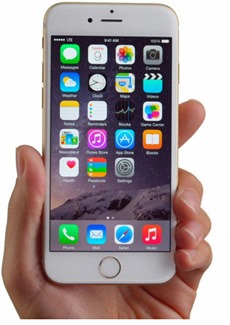
Well, with the Apple iPhone 6 we're looking at one of the thinnest and sleekest handsets in the market – still. It's got a strong combination of metal back (which feels exceptionally premium, borrowing bucketloads of design language from the iPad Air) and the way the screen curves into the chassis gives it a slight lozenge feel.

That 8Mp sensor doesn't sound like much, and Apple is right when it says we shouldn't worry. Fact is, the iPhone 6 takes excellent photos. While the iPhone 6 lacks the optical stabilisation of the 6 Plus, it's still capable of sharp and detailed images with great exposure and accurate colours. If it had an optical zoom, it could almost replace a dedicated camera. What's important is that you'll have a great camera on you all the time if you buy an iPhone 6. Plus, the good news is that Olloclip's lenses are now available for the iPhone 6, which brings wide-angle, fisheye and two macro lenses in one package.

Apple couldn’t go too big on the iPhone (probably why it released two) because if it had a lot of its core users would have been pretty pissed; a switch from 4in to 5.5in is definitely a bridge to far for those who only just found out what a phablet is. For reference, the iPhone 6’s display is the exact same size as the one aboard the Nexus 5, HTC One, Samsung Galaxy Alpha and Moto X – again, all perfectly proportioned handsets. 

The other big design change is to the power button, which has now been moved to the right-hand side of the phone. This makes a lot of sense and, given the phone is now a larger device at 138.1 x 67 x 6.9mm, hitting the top of the handset is a much harder task, so moving the button is the right thing to do.

Last year, iOS 7 was truly innovative. It had a new look, new features, new ideas about how we’d all use smartphones. A lot of those ideas were great, a lot of them were bad, and the whole OS felt chaotic as a result. This year, Apple presents refinement in the form of iOS 8.

Add those three things together, and this phone on my desk isn’t at all surprising. It’s the iPhone 6: a bigger, brighter, badder iPhone designed to appeal to the customers for whom the iPhone 5S and its 4-inch screen now seem adorably antiquated. (Which is basically everybody.) It starts at $199 on a two-year contract and comes in silver, gold, and space gray. It’s full of new technology and crafted from a new mold. Apple intends for it to be the new standard in a new type of smartphone, to be the big-screen phone that anyone can handle. Not the first big phone, but the best. The big phone for everyone.

Like the rest of the exterior buttons, the power key is raised and easy to hit in both left and right hand modes. It's metallic, and crucially doesn't have the same rattle that I criticised on the iPhone 5S.

The iPhone 6’s battery is one of the primary beneficiaries of both this relentless tweaking — and the addition of some new hardware real estate. The phone can easily last me a day and a half, from one morning to the next afternoon, no matter how much I use it. I still charge it almost every night, but at least I’m not forced to baby the battery just to get it through dinner anymore.

There's a good argument that adding more pixels would just drain the battery faster and give the CPU more work to do. In fact, only using the screen resolution that's required is something that's becoming more popular, as you can see from the 720p Samsung Galaxy Alpha.

With a bigger screen, some design changes have had to be made. The most obvious one is that the power button is no longer on the top but has been relocated to the upper right-hand side. This makes it much easier to reach with a finger or thumb, even more so than with the iPhone 6 Plus.

The iPhone 6 is among the fastest phones around. It comes equipped with the A8 64-bit dual-core processor, which Apple claims delivers a 25 percent boost in speed and a 50 percent graphics boost over the iPhone 5S; this claim was confirmed in both our benchmark tests (see below) and hands-on testing. Navigating the UI and launching apps is zippy, and the phone runs nearly all tasks at a silky-smooth clip.

In many ways we've reached 'peak smartphone', in that we know a flagship phone from a major manufacturer is likely to be a top performer. We all like to compare, of course, but a few benchmark points here and there tend not to make much difference in the real world. This is important because Apple has - as ever - deliberately obfuscated the spec of its latest handset. Not for Apple Samsung's boasting about octacore processors and multiple megs of RAM. Apple likes to boast about odd specs such as 64-bit and 'Retina' displays, but it tends to avoid getting into hardware arms races. The iPhone 6 is no exception.

The rest of the iPhone 6 is very similar to the iPhone 5S, with the speakers at the bottom flanking the Lightning port. Well, I say speakers: it's just the one speaker, but thanks to the slightly elongated bottom of the phone you won't cover it when holding the phone in landscape orientation.

So what’s changed? The glass front is now curved and the corners are more rounded than before, which results in a softer in-hand experience. Flip the phone over and you have two antenna bands on the back and that “controversial” protruding camera sensor, which A LOT of people seem very annoyed about. Personally, neither of these things bothered me all that much – they’re just there. I don’t think they add or take anything away from the overall dynamic of the handset.

It’s simply and cleanly designed, with a metal back that curves cleanly around the sides. There are few seams and no ugly clutter. The only real flaw is the antenna design: Apple opted to essentially outline the top and bottom of the phone’s back with small plastic stripes where wireless radios can transmit signal. It just looks bad, like someone drew on my phone with a marker. HTC’s simple, striped design on the One M8 is far better, and even Apple’s glass-strip-on-the-top-and-bottom approach for the 5S looked nicer.

Even with a slightly larger screen, the iPhone remains comfortable to hold. With fast performance, a great display, an elegant new design and a much-needed software update, it's one of the best smartphones you can buy right now. We wish it had the same long battery life as the iPhone 6 Plus (not to mention its optical image stabilization) but even then, the iPhone 6 is still the better choice for most people.

Saturday, March 12, 2016

Asus Zenfone Laser

Asus Zenfone Laser

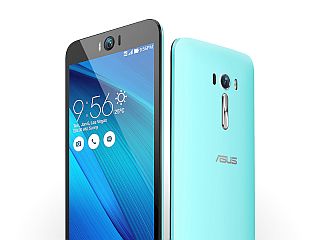
Asus Zenfone 2 Laser has a highly-intuitive control layout that makes it extremely user-friendly. Whether you are right or left handed, the ergonomic arc design of the smartphone enables you to easily snap selfies, adjust the volume or operate the smartphone without any hassle.

i bought this phone after days of research for phones upto 12K and trust me no other phone meets such specs. The Brand of Asus is lived upto, the design is best in class. Very sleek and stylish. Touch is very nice and speed as you can expect with 1.5Ghz and 3Gb RAM is outstanding. Best part is the camera which is brilliant with its Laser auto focus feature. No Lags, No heating issues while playing games, battery back is mammoth. Trust me i have spend so much time for a phone with this price tag, this is the best out there. I am really happy with the product, one can easily go for it !!

About Snapdeal – India’s Ultimate Online Shopping Destination Snapdeal’s vision is to create India’s most impactful digital commerce ecosystem that creates life-changing experiences for buyers and sellers. In February 2010, Kunal Bahl along with Rohit Bansal, started Snapdeal.com - India’s largest online marketplace, with the widest assortment of 15 million+ products across 500+ diverse categories from thousands of regional, national, and international brands and retailers. With millions of users and 200,000 sellers, Snapdeal is the shopping destination for internet users across the country, delivering to 5000+ cities and towns in India. In its journey till now, Snapdeal has partnered with several global marquee investors and individuals such as SoftBank, BlackRock, Temasek, eBay Inc., Premji Invest, Intel Capital, Bessemer Venture Partners, Mr. Ratan Tata, Foxconn among others. Online Shopping – A Boon The trend of online shopping is becoming a household name and so is Snapdeal. Snapdeal is the preferred choice of hundreds of thousands of online shoppers given its mammoth assortment of 15 million+ products, quick delivery even to the remotest corners of the country, and daily deals, discounts & offers to make products available at slashed down prices to our valuable customers. Get Started! Shop Online Today at Snapdeal If you have been missing out on all the fun of online shopping thinking it requires one to be a technology aficionado then we have good news for you. Shopping online particularly at Snapdeal is a child’s play; all you need is a mobile phone or laptop or tablet with Internet connection to get started. Simply log into Snapdeal.com and browse through the wide assortment of products across categories. Once you have zeroed in on your favourite products, simply place the order by filling in the details; the products will be delivered right at your doorstep. Fulfil Your Entrepreneurial Dreams! Sell Today at Snapdeal Thanks to easy-to-understand, flexible policies and SD Advisors to help sellers at each step, anyone from a manufacturer to wholesaler to retailer can sell on Snapdeal. Begin your entrepreneurial journey with Snapdeal as a seller by filling a simple registration form here. Once the registration process is done, you can start selling your products to the entire country by sitting at your home or office. Doesn't it sound thrilling? Of course, it is and the excitement will build up with every order you receive! Start selling at Snapdeal today and see your business reach staggering heights. Shop on the Go – Install Snapdeal App Today! You can shop for your favourite products at Snapdeal even on the go using Snapdeal App. Available for both Android and Apple users, the app can be downloaded from Google Play Store and Apple App Store respectively. The app is quick, user-friendly, and enables shoppers buy products with a breeze. What's more, get timely notifications on your phone or tablet so that you don't miss amazing deals and offers. Download the app right now and experience how fun it is to shop on your mobile!

ZenFone 2 Laser’s 8MP PixelMaster camera with its f/2.0-aperture lens captures stunning, high-resolution photos with zero shutter lag. The brand-new laser-autofocus feature greatly reduces blurring and enhances image stabilization, and the industry-leading Low Light mode employs pixel-merging technology to capture up to 400%-brighter photos at night or in low-light scenes — all without the need for a flash. Backlight (Super HDR) mode lets you see clearly through daytime shadow and Super Resolution mode helps you to capture detailed images at resolutions of up to 52MP!

Power packed with the most engaging features along with an intuitive UI, the new Asus Zenfone 2 Laser ZE500KL smartphone is all set to dazzle you with its ultimate performance. It packs all the latest features along with an extremely stylish design that makes it stand apart from other smartphones. With 4G LTE speed, this ultimate smartphone thrills you with superfast download speed and seamless web browsing. Click stunning snapshots, download your favourite videos, listen to music and explore web at blazing fast speed with this ultimate smartphone brought to you by Asus. You can buy Asus Zenfone 2 Laser ZE500KL smartphone at best price along with 1 year Asus India warranty only at Snapdeal.

ZenFone 2 Laser’s (ZE500KL) rear camera has laser auto-focus technology for the fastest possible clarity. ZenFone 2 Laser’s laser beam measures distances at lightning speed – and that means near-instant focus as fast as 0.03 seconds, especially in dim light conditions. The laser auto-focus even accelerates close-ups photography, compensating for the extra distance created by the lens receding during framing.

SwApNiL 1 Review Verified Buyer Jan 14, 2016 Finally Brought it. Actually I wanted go for Red colour but no issues with black too. Since it was a second thought to be brought. However we can purchase the back panel at low prices online. So as an alternate option brought it but I am happy with the device. Imp Notes.. Free to use internal storage is 10GB in which after you update to newer Firmware and default inbuilt apps you are left out with 7.5GB install few social apps a few shopping apps a few necessary apps and a single Game you are left with 5.9GB to use Internal storage. Next Even if you use a MicroSD external storage device, no matter the size of external storage. You can not move all apps to MicroSD, only a few apps could be.. While buying the screen guard look for the detailing at your mobile and screen guard. Make sure you do not put on the screen guard with eyes shut. Since either sides of the front speaker you get the sensors and while putting on the screen guard check for spaces provided. If the sensors are covered by the guard, few functions in the mobile will not work well. You will be frustrated For sure. Nothing else regardless of it.. Was this review helpful? YES 4

Iphone 4 Review

Iphone 4 Review

Brian June 25, 2010, 2:17 pm I'm not an apple fan and hate there marketing.And i must admit the site is coming across as very apple biased. The phone looks ok, like a small screen to me, And the camera is still way below standards, but the its phone not a camera.But the point about price and a 7/10 is a joke. I can build a pretty solid PC box for that much and have way more power on tap, and with the left over cash buy a cheap phone. It is like most apple products rediculously over priced, and designed to tie you into staying with Apple.

The tech world has changed in the year between the announcement of the iPhone 3GS and the iPhone 4. In the intervening time, Apple released the iPad, and created a whole new way for people to interact with iOS apps. As someone who has both an iPhone and an iPad, I’ve discovered that the amount of time I spent using my iPhone has been dramatically reduced, as I’ve moved my attention to the iPad versions of my favorite apps.

The iPhone 4’s right side is barren of landmarks, save a micro-SIM slot like the one found on the 3G iPad. By using a micro SIM, Apple freed up some space on the inside of the phone, while also ensuring that your old phones with full-sized SIM cards wouldn’t be compatible with your new devices without some SIM surgery.

Picked one up yesterday. It's simply the best phone I've ever owned. It would take something monumental to move me away from iPhone to another platform, such as Android. As has always been the case, the real trump card of the iPhone isn't in the techie details, it's the beautifully simple and elegant interface that is so easy to use.

iCloud is useful in many other ways too. Apple gives every iOS users 5GB of personal storage, into which they can upload music, photos and other data. You can then pull this information down to your device without having it clogging up your phone's internal storage.

The interesting choice Apple has made with FaceTime is implementing it as a part of the Phone app, rather than creating a unique FaceTime app devoted to videoconferencing. There are a few ways to start a FaceTime session with someone; you can dial their iPhone 4 and, once you’ve connected, tap the FaceTime button on the screen. You can also just tap on a person in the Contacts list, scroll down, and tap the FaceTime button, bypassing the traditional cell phone network altogether. All FaceTime calls appear in your recent call list, just as if they were traditional phone calls.

Though "stunning," "gorgeous," and "dazzling" are words we usually use to describe high-quality smartphone displays, we're not sure if they do the iPhone 4 justice. Believe us that everything about this display is fantastic, from the bold colors and graphics to the vividly clear text. You can see it reasonably well in direct light and the details on Web pages, photos, videos, and applications are as sharp as they come. But the best thing is that you can't see any pixels on the display. It's quite remarkable and especially apparent when you hold it up next to the 3GS. No, we're not inclined to completely believe Apple's claim that the display exceeds what's perceivable by the human eye, but there's no denying that it looks good. We haven't seen the yellow areas that users have complained about. For more on the display, see the full testing results from CNET Labs.

The iPhone 4 is also the first real design departure for the iPhone in two years; I like the metal styling and the solid feel, and the flat glass front and back are gorgeous. But I’m concerned that the glass back adds an unnecessary level of fragility to the product. What’s the point of designing a beautiful product if it’s so fragile that your customers need to stick it in a case (or wrap it in a rubber bumper) in order to protect it? And of course, I'm concerned about the fact that touching the phone in the wrong places can hamper cellular reception.

The Good The iPhone 4 offers enhanced performance, a lovely new display, and an improved design. It also adds a ton of sorely needed features, both by itself and through the iOS 4 update. The Bad Multitasking entails some trade-offs, and home screen folders are limited to 12 apps. AT&T reception continues to be spotty, and you'll need a case for the best calling reception. Also, we'd prefer a 64GB model. The Bottom Line With the iPhone 4, Apple again shows that it is a powerful player in the smartphone wars. It won't be for everyone, the call quality and reception vary if you don't use a case, and AT&T's network remains a sticking point, but the handset's striking design, loaded feature set, and generally agreeable performance make it the best iPhone yet.

My only question is, will people use it? Despite the hype when iChat AV was released, I don’t find myself video chatting routinely with anyone except my family on business trips. (And even if I take my iPhone 4 with me on those trips, I won’t be able to chat with my family on our iMac until iChat is updated to talk to FaceTime.) Video phone calls are very much something we all expected to happen in the future, and the future is clearly here—but were those visions of the future right? A video call requires your full attention; I can wash dishes while I talk on my iPhone, but not if I’m using FaceTime. Holding that phone so that the camera is pointing at your face can also tire out your arm.

Engadget Review iPhone 4 review Summary from $91.94+ Buy Now Pros Amazing new industrial design Retina Display is stunning iOS 4 makes major improvements Cons Annoying pop-up notifications Reception is improved, but still has issues Desperately needs widgets The iPhone 4 is no small thing to review. As most readers of Engadget are well aware, in the gadget world a new piece of Apple hardware is a major event, preceded by rumors, speculation, an over-the-top announcement, and finally days, weeks, or months of anticipation from an ever-widening fan base. The iPhone 4 is certainly no exception -- in fact, it may be Apple's most successful launch yet, despite some bumps on the road. We've already seen Apple and AT&T's servers overloaded on the first day of pre-orders, the ship date for the next set of phones pushed back due to high demand, and die-hard fans in line outside of Apple locations a week before the phone is actually available. It's a lot to live up to, and the iPhone 4 is doing its best -- with features like a super-fast A4 CPU, a new front-facing camera and five megapixel shooter on the back, a completely new industrial design, and that outrageous Retina Display, no one would argue that Apple has been asleep at the wheel. So the question turns to whether or not the iPhone 4 can live up to the intense hype. Can it deliver on the promises Steve Jobs made at WWDC, and can it cement Apple's position in the marketplace in the face of mounting competition from the likes of Google and Microsoft? We have the answers to those questions -- and many more -- in our full review, so read on to find out! Read Full Review Scores Engadget 92 Critic 11 Reviews 8.1 Users 634 Reviews 8.9 Breakdown Reception and call quality 7.0 Display 9.2 Battery life 8.0 Camera 8.0 Ease of use 8.2 View All Scores Specs iPhone Type Smartphone (iOS) Talk time 2G, 3G Camera yes Internal memory 8 GB Screen size 3.5 inches View Full Specs Specs iPhone Type Smartphone (iOS) Talk time 2G, 3G Camera yes Internal memory 8 GB Screen size 3.5 inches View Full Specs

Wednesday, March 9, 2016

Samsung Galaxy Ace 3 Review

Samsung Galaxy Ace 3 Review

You can pick up the Galaxy Ace 3 in two colors. I'd tell you to guess what they are, but black and white are too obvious to make the game fun. Everyone would be disappointed if it was just black, though.

The power button is on the right side, volume is on the left and the charging port is below. Like most Samsungs, the Ace 3 has a 'clicky' centre Home button with capacitive ones either side for Menu and Back.

Submitted by Gordon Johnson Houghton on Tue, 2015-10-27 13:09. I got this phone because it's cheap - BIG mistake. Reception on it is woeful, I get better reception on my 3 yr old HTC8S with the same SIM card. The screen is very unresponsive. It takes several seconds for a letter to appear after typing and it takes about 20 minutes to send a text. The battery life is measurable in minutes. I sent it back to Samsung because it's so bad and they sent it back to me after updating software and claiming nothing wrong. Even worse now - I can't turn off the click noise on the keyboard and my contacts are all missing the initial 0 so it can't dial out by name or recognise incoming calls. DO NOT BUY THIS PHONE!

It seems a little odd that the screen matches that of the HTC Desire 500, yet somehow seems brighter and crisper. Then again, Samsung is famed for putting truly spectacular screens onto some of its devices.

The Samsung Galaxy Ace 3 is an affordable little smartphone that provides an adequate user experience for its price. It’s compact, fairly lightweight and doesn’t lag too badly for a budget phone. Its best feature is its 4G connectivity, but its greatest flaw is lag, which can end up cancelling out the benefits that 4G usually supplies.

Do not touch with a long chain of smart phones on a stick. Worst phone since the sister phone to my Motorola startac. Love Samsung as a company, have working portable TV that served as my C64 monitor. Phone awful, no choice in tones without going online, but it's raison d'être to be a phone fails abysmally. Will swap settings whilst speaking, you can hear the menu going through the motion. Managed to switch phone into Swedish whilst speaking to family. Regret giving up HTc.

The Ace 3 weighs 120g so it’s lighter than the Moto G (143g), but heavier than the Galaxy S4 Mini (107g). At 9mm thick, it’s slimmer than the Moto handset and matches the S4 Mini in the slenderness department. Despite the slippery feel of the removable plastic back cover, the Ace 3 is comfortable to hold in one hand and slips easily into a jeans pocket.

The Galaxy Ace 3 is powered by a dual-core 1.2GHz Qualcomm Snapdragon 400 processor backed up by 1GB of memory. Its performance is very impressive, beating most of the other smartphones in its price range. It achieved 1,261ms in the SunSpider Javascript benchmark, which is faster than the Motorola Moto G, and was able to produce 17fps in the challenging 3DMark Ice Storm Unlimited benchmarking test. In real terms, this means the Galaxy Ace 3 is more than capable of running fairly advanced 3D games and loads web pages with relative ease. Browsing the web wasn’t quite as smooth as on the Alcatel One Touch Idol S, but it wasn’t far off.

The launch of the Motorola Moto G has made shopping for budget mobiles considerably easier. Its 4.5-inch screen is sharper and looks better than the Ace 3's, its quad-core processor provides a smoother operation and at £135 SIM-free, it's two-thirds the price of the Ace, too. The Moto G outperforms every other budget phone available right now.

We won’t hold this against the Ace 3. Stellar camera performance is not something that is expected from the lower ends of the market, but we won’t give it any points for what is essentially a mediocre shooter. It's fine for instagram, but if you want nice family or nature shots then this isn't a camera that will deliver.

The Samsung Galaxy Ace 3 is a terrible phone, one of the worst i have ever owned. Phone is incredibly slow and laggy. Touch screen sensitivity is so poor 9/10 times it will launch the wrong app instead one touched. With apps taking a painful eternity to launch and run. The poor sensitivity of the screen makes texting and emailing almost impossible. Bluetooth is poor and wifi connectivity is crappy at best and often gets dropped by the and then gets marked as not stable to use. Battery life is poor these phones get incredibly hot when used for GPS / Calls or Data and battery life just dissapears befoore your eyes. Slow I have never seen a phone so slow as this one. Its factory 4GB micro SD card is too small to be on any real use. Phone crashes or freezes almost daily forcing a restart, or having to take the back off pull the battery out in order to reboot the phone. After three years of this phone constantly annoying me, I finally decided to fix it permanently by taking to it with a heavy metal mallet. My Samsung Galaxy Ace 3 no longer gives me any problems. I would advise people to steer well clear of this phone its simply not up to the of modern smartphone use.

Say “hi phone” Unlike most mobile voice capabilities, S Voice allows you to actually unlock your phone with a simple command that you customize. Once it’s unlocked, tell it to play a song, do a web search, or even take photos.

Easy-to-use camera modes let you make your photos more creative, more you, and more share-worthy. There’s even a mode that instantly pings friends when you’ve taken pictures of them.

Personally, we'd go with the Moto G. The 4G on the Ace 3 was nice, but the lack of hardware power and slow browser ended up bringing the speed down in other ways that at times almost made the 4G unnoticeable.

Xiaomi Mi2 Review

Xiaomi Mi2 Review

Refrain from posting comments that are obscene, defamatory or inflammatory, and do not indulge in personal attacks, name calling or inciting hatred against any community. Help us delete comments that do not follow these guidelines by marking them offensive. Let's work together to keep the conversation civil.

As before, the latest version of MIUI still lets you keep a bunch of quick toggles (such as screen rotation, WiFi, torch, data connection and guard mode) on the Android notification tray, and better yet, this time the default layout is page mode instead of compact mode. In page mode, the notification tray is split into two tabbed pages, one for just notifications and the other for just toggles. Whereas in compact mode, you get everything on one page, but naturally you don't see as many toggles at a glance -- you have to scroll the row of toggles horizontally to see more. Again, users are free to rearrange these toggles at will. Such flexibility is what made us fall in love with MIUI in the first place. Having said that, somehow Xiaomi left out the toggle for WiFi tethering, but it shouldn't be too hard to add it back.

Now, it's a given that the next step for Xiaomi is to spread the hype beyond China, with Taiwan already confirmed to be the next stop, possibly followed by some European countries early next year. The biggest challenge now is that the company is seemingly struggling to keep up with demand, which is giving competitors the opportunity to accuse it of artificially stirring up hype, as well as letting them catch up with similar products in the meantime. As outsiders, we don't know the truth behind the shortage, but what's certain is that entering those new markets would require massively scaling up production. Only then can they worry about setting up new retail channels, which should be a doddle anyway if the local carriers are fighting over partnership deals. Now, let's see where that Xiaomi set-top box will take the company next.

For multimedia entertainment, the bundled music app does a pretty good job: you can sort the music by artists, albums, folders and playlists, plus it automatically looks up synchronized lyrics for those who want to sing along. There's also a sleep timer which can be set from one minute all the way up to 90 minutes. Our favorite part of the app is the integrated search engine for Baidu Music, which has a surprisingly large library with both local and foreign music (they even have PSY's Gangnam Style accompanied by Chinese lyrics), and it works outside mainland China. By default, you can only stream music over WiFi, but if you have a reasonable 3G data allowance, you can manually enable streaming over cellular network in the app's settings. On the other hand, the native video player isn't as exciting but it'll handle your usual AVI, MP4 and RMVB files -- you'll have to open them through the file explorer app. If you need to view any MKV files, you'll still need to rely on third-party apps like MX Player and PPTV (which is now very popular in China as it also offers a vast range of movies and local TV shows for streaming).

Fans of MIUI should already be familiar with its library of funky themes. These aren't just skins that you slap onto the icons and home screens, as many themes also offer unique lock screens and handy toggles, as pictured above. Like a lock screen but prefer a different set of icons, fonts and ringtones? No problem: for each theme, you can select which of its particular features you want to apply.

Let's talk about the keys and ports. Below the display you'll find three shiny capacitive buttons for menu, home and back. But, unlike most Android phones these days, Xiaomi didn't implement a backlight this time around. No big deal, perhaps, but it's just not as convenient as what we're used to seeing on most other Android phones these days. Thankfully, there's still an LED indicator -- it's right below the home button instead of next to the earpiece. As for physical keys, they're all on the right-hand side of the phone: there's a volume rocker followed by a power button, both metallic and nicely crafted. It's a slightly weird arrangement compared to most other phones, but we got used to it very quickly.

Hi, I have buy mi 2 8 gb phone in india, now im in colombia, but my phone is not working in here, i have buy a local activated sim in colombia but signal is not working, i have try this sim in other phone it is working fine. But i cant get signanal in my mi2 phone plz suggest.

This phone looks awesome, and the best specs for a phone of this size. Any chance of some more photos of the UI? @Andrew – Yes, the MI3 is forthcoming but not everyone wants a 5″ display, and considers the size of that handset far too big. This MI2 looks just right for me.

@Andrew – Yes, the MI3 is forthcoming but not everyone wants a 5″ display, and considers the size of that handset far too big. This MI2 looks just right for me.

MIUI is also about the small details, some of which have been around for a while. For instance, if you want to move an icon from one home screen panel to another, you can hold your finger on it until it hovers, and then use another finger to scroll to your desired panel. (In fact, if you have one of the latest HTC phones, you can do the same.) You can also organize all the home screen panels by pinching with three fingers on any panel, at which point you'll see a preview of your six to nine panels at a glance, and you can rearrange them or set your main panel as you desire.

XDA Developers was founded by developers, for developers. It is now a valuable resource for people who want to make the most of their mobile devices, from customizing the look and feel to adding new functionality. Are you a developer?

Asus Zenfone 5 Review

Asus Zenfone 5 Review

The Good The Asus ZenFone 5's simple design and sturdy build impress. The Asus ZenUI comes with interesting new features that enhance the Android experience. The Bad The camera shutter is a little slow, even in bright daylight. The Bottom Line The ZenFone 5 is able to give other budget handsets such as Xiaomi's Redmi a challenge but in order to get the best from the phone, be sure to get the 2GB version to avoid any performance issues.

Myself Manjunath Lucky from Bangalore, i got new Asus Zenfone 5, When it comes to style and shape its sexy stylish and curvy with less price then any other 5" display, 8 MP main camera and 2 MP front, 2 Gb Ram and 1.6 GHZ with all kind of good features. when it comes to battery - u can use a day if u don't use much of Whatsapp and FB. I have a problem that the display light gets on automatically can anyone tell me whats the problem.

It's not a bad-looking interface either, and with our version of the Zenfone phone we found performance to be pretty good. Much like the Moto G 2014, there's no serious lag in operation. It's a blessedly low-stress phone. (We can't say whether the 1GB RAM version will offer the same experience, though.)

The Asus isn't anywhere near as fast as, for example, one of Samsung's top-end phones in shooting performance, and while its results are ok the colour saturation is over the top, there's apparent grain throughout and poor auto white balance. There's a bit of purple fringing - that purple "shadow" around areas of high light contrast - too.

The arrival of the excellent sub-£150, 5-inch Motorola Moto G2 makes it difficult to recommend the Zenfone 5, but after the disappointment of the more diminutive Asus Zenfone 4 this is a big step in the right direction for Asus. It’s one of the Taiwanese company’s first phones headed for the mainstream, and it’s a bit of a revelation.

You miss out on a few little higher-end hardware nods too. The trio of soft Android keys - use to navigate home, back and to current apps - don't light up, for example, which gets a bit annoying at night and means the front of the phone doesn't look quite as pure and simple as it could.

Gaming geek, semi-failed cyclist, big screen and movie lover and fan of both big beats and beer. As the former Reviews Editor at What Digital Camera, self-confessed camera geek Mike has seen pretty much every digital camera that's been made. His work has featured in a variety of well-respected titles, including Wired, TechRadar, Professional Photographer and many more.

The 2-megapixel f/2.4 front-facing camera is respectable too, having the exposure compensation chops to make indoor-lit selfies and video look clear enough. Don't expect the world from the cameras, but they do their job.

Like HTC's Sense UI, the built-in Asus apps, such as the calendar, email, phone and messages are color-coded. I'm not convinced the shading is useful, even in HTC's Sense UI, because there's almost no need to use a color to recognise the app you're using unless they're visually similar in layout (which they aren't). It does look nice, however.

Editors' note: After I encountered sluggish performance in my initial ZenFone 5 review model, Asus sent us a new unit with updated firmware and 2GB RAM (the retail model sold in Singapore). Due to the improved performance that rendered the previous issues moot, I've updated this review and the score accordingly.

Very Bad experience and bad buy 18 October 2014 2/5 stars By pasupula sankaraiah I will not recommend this phone. I am unhappy and sad for my buying with out seeing user reviews. purchased the phone thro flipcart seeing only specs. in the internet, 30 Hrs experience. Pros. top rated specs. Cons.-Severe battery draining with out use, not handy, does not appear user friendly. unhappy and sad experience. Please don't purchase. Puchased on the same day moto e also. I strongly recommend moto e. I am in a fix whether to keep this phone for my use or give it to my son. very pathetic situation. Was this review helpful? Yes No 2 out of 2 user(s) found this review helpful

The rear cover is removable, but the 2,110mAh battery is embedded. All you can do with the back cover off is access the dual SIM-card and microSD-card slots. Also on the handset's back are the audio speaker and the 8-megapixel camera.

The Asus ZenUI allows you to customise onscreen elements, such as the colour theme and level of transparency. The company has customised nearly all stock apps on the handsets including the Gallery and Music apps, adding more functionality. The Gallery app shows a timeline of images and videos, as well as the ability to sync them to any cloud service including the company's own Asus Webstorage. The default music player offers option to tweak equalizer levels even during song playback.

Other aspects of the screen are also great, given you can get on-board for as little as £150. Contrast and colours are strong but natural-looking fresh out of the box, and you even get a bit of control over how the display looks.

More advantages and less dis-advantages 09 May 2015 4/5 stars By Lucky Myself Manjunath Lucky from Bangalore, i got new Asus Zenfone 5, When it comes to style and shape its sexy stylish and curvy with less price then any other 5" display, 8 MP main camera and 2 MP front, 2 Gb Ram and 1.6 GHZ with all kind of good features. when it comes to battery - u can use a day if u don't use much of Whatsapp and FB. I have a problem that the display light gets on automatically can anyone tell me whats the problem. Was this review helpful? Yes No

The back of my review ZenFone 5 is finished in this rather fetching red, but it's also available in purple, white and black. Asus says the back feels like ceramic. It doesn't. It feels like what it is: fairly basic plastic.

The Zenfone 5 is the middle of the range of 3 Zenfones, all featuring slightly curved plastic backs, and is available in a handful of colours. As seen on its Zenbook laptops, and somewhat of an Asus signature look, the range also features a little metal lip underneath the screen with a shiny finish textured with concentric circles.

After a month with this terminal , I can advise you to your next mobile option . It is a complete mobile that reminds me of the iPhone , with its Zen UI interface . Your camera , despite being 8 mpx , is super full . It has several filters such as rewind time ( choose your best photo in a few seconds before and after photo) , HDR mode ( for better quality of colors) , panoramic mode , night shots in low light , selfie mode ( indicates the number of people who appear in the selfie , and when you recognize their faces will proceed to make several pictures) , embellishment , miniature, depth of field , intelligent removal (removes that person who crosses behind you automatically) , all smiles ( burst of photos, choose the one you like ) and gif animation mode . In video mode also will have the time interval mode to record videos with traffic lights and impressive . Surely your camera is amazing. And not just that , it's all together and great price.

Nokia X Review

Nokia X Review

This kind of setup is enough to confuse most users. Along with this mix of Microsoft services, Windows Phone and Asha, the X is, at its core, an Android device. Thus, it supports most Android apps, but the means of obtaining those apps are not as cut and dry as they should be. The Nokia Store is the official place to go, but it doesn't offer the same library as the Play Store. Instead, Nokia curates apps: It invites developers to add lines of code that make their apps compatible with Nokia's special UI, and then submit their apps and wait for its approval. It's quite the process, and judging by the limited number of available apps in the Store, it seems that a lot of developers haven't bothered with it yet.

The Qualcomm Adreno 203 is one of the weaker GPUs on the market. Demanding games are therefore out of the question. Since the Nokia App Store does not offer any such games, this is not really a drawback and all available games run without any issues. Current 3D games or highly rated games are nowhere to be found, but classic games like Angry Birds or Fruit Ninja are available for download. The position sensor and the good touchscreen work very well and do their part to make the gaming experience an enjoyable one.Sim City Deluxe Fruit Ninja

Simply put, Nokia finally realised it could not afford to allow Android to displace it in the value segment, and that no one was interested in supporting yet another new OS. So it finally turned to Android - or as we now know, its underlying Linux foundation.

The X range comes in a lovely range of colours with the basic X is available in black, white, cyan, yellow, bright red and the bright green, which is especially striking. The slightly higher spec X+ shares the same palette while the larger XL swaps the red for an even nicer orange colour.

Summary For its price, the X has respectable features and good hardware. However, its confusing ecosystem and numerous performance issues make it hard to recommend over similarly priced budget phones.

VerdictReviewed: Nokia XThe Nokia X is a smartphone with a bright and evenly lit display and high build quality. Its main drawbacks are without a question the low performance and the low number of available applications. Why the manufacturer does not allow access to the Google Play Store will probably remain a mystery to potential buyers. Novice users, which are the target group for this phone, will have to find workarounds to get some apps installed, if they can be installed at all. Users who are not familiar with smartphones cannot be expected to manually install APKs to get familiar apps like WhatsApp or Instagram. The Nokia X Software Platform is also a bit sluggish at times, which can lead to stuttering. More demanding applications like benchmarks frequently crash. For that reason, we have decreased the final score (-4), although the full-featured offline navigation and the streaming-app Nokia MixRadio (+2), which is available free of charge, lessen the impact of the negative score. The user interface is well thought out as well as neat and easy to operate. Microsoft Mobile's effort is a good one overall, although some improvements are definitely necessary. The Nokia X handles most daily duties without issues; the voice quality is quite good as well when compared to competing smartphones. Users in the market for a smartphone that is simple to use and does not cost an arm and a leg should take a look at the Nokia X - provided they can live with the limited number of applications.

Rumors of Nokia making an Android smartphone had been churning for a long time. Finally, at Mobile World Congress in March, the Finnish company unveiled a new range of phones, the X, X+ and XL , aimed at those who can't afford hundreds of dollars or pounds on a new mobile.

What about speed? Well, there’s a noticeable lag no matter what you do with the phone but it’s tolerable to an extent. Simply browsing through the store or Fastlane is manageable but the lag acts as constant reminder that this is strictly a budget phone and you can only use that many apps comfortably, even though most of them will install. The Nokia X accepts APKs naturally and the Nokia Store has most of the popular apps from the Play Store that are guaranteed to work on the X. In case you don’t find it here, you can always refer to the One Mobile market app (pre-installed) however, there’s no guarantee it will work the way it’s supposed to.

Just like on Nokia's latest Lumia devices, the X features a Glance screen that lets you view the date, time and symbols for each type of notification awaiting you. Sometimes it works; sometimes it doesn't. Additionally, you can double-tap on the screen to wake it, but I couldn't get this to work very consistently. Unlike most Android devices, which offer reasonable multitasking options, the X is much more restrictive. You can only get to the Fastlane from the home screen, which means you can't multitask without exiting your current app completely.

Nokia's other notable app is Mix Radio, a fantastically underrated ad-free streaming service that you can customise based on your tastes. It works by asking you to pick a pre-made mix or create on by entering three artistes. If you create your own, you'll hear tracks by those three as well as other similar artistes which the app thinks you'll like. You can skip up to six tracks in each mix per hour, and upvote or downvote tracks to help it learn what you like. In our brief testing, we couldn't find an artiste too obscure for Mix Radio, across genres including classical, folk, and even Brit punk. The search function auto-suggests Indian artistes first, and a wide range of languages and regions are represented.

Video is recorded at a puny 352x288 resolution, which to us, makes it rather pointless. Quality wasn't that great, so we'd only use the Nokia X for video if there was nothing else available.

We ran a subset of our usual benchmarks, mostly due to the low-end specifications of the Nokia X. SunSpider and Mozilla Kraken, our browser-based tests, took 2733.8ms and 29863.9ms respectively to run, which is up to four times as long as a top-end Android phone and twice as long as models that sell in the mid-range today. Quadrant and AnTuTu gave us scores of 2,686 and 7,577 respectively, which were consistent with our low expectations, and are just about okay for a phone priced at this level. Neither 3DMark nor GFXbench, our primary graphics tests, was able to run on the Nokia X.

The X doesn't stray from Nokia's signature design language. In fact, if I were to briefly see it in the wild (not knowing what it was), I'd easily confuse it for an Asha 500-series device. Just like the Ashas, the X has square corners, straight edges, a large bezel and a removable plastic back cover with a matte finish, although it lacks the transparent casing of the Ashas. My review unit is a white, dual-SIM Nokia X, but it also comes in black, blue, yellow, red and green.

Sony Xperia Z Review

Sony Xperia Z Review

Alex Colon is the managing editor of PCMag's consumer electronics team. He holds a Bachelor's Degree in English Writing and Literature from Pace University and got his start editing books before deciding technology would probably be a lot more fun. Though he does the majority of his reading and writing on various digital displays, Alex still loves to sit down and read a good, old-fashioned, paper and ink book in his free time. (Not that there's anything wrong with ebook readers.) More »

The Z’s battery-saving Stamina mode turns off data when the screen is off, boosting standby time by a factor of four, and we found it hardly lost any charge overnight – around 1 per cent, or none at all. When in use it drains just as swiftly as any other flagship – the Z will last five hours of intensive use on full brightness.  

It's not night-and-day by any means, but HD content on the Xperia Z is undeniably crisper and more wow-inducing than on the Galaxy S3. It's a shame that right now none of the big movie streaming services are offering 1080p to mobile devices, but we know that Netflix is looking into it and the likes of Sony's own Video Unlimited can't be far behind.

Despite the Xperia Z's enhanced durability, it remains extremely thin, flat and pocket-friendly. Measuring a mere 0.31 inch thick by 5.47 inches tall and 2.79 inches wide, I found it svelte enough to slip into tight jeans pockets and compact enough to lose in messenger bags. That said, the phone's angular edges and flat back make it less comfortable to hold than the HTC One and Samsung Galaxy S4, which have gently curved backs. The Xperia Z's battery is also embedded, so you can't swap it out for a fresh power pack in a pinch.

There are only a couple of ways to watch 1080p movies on the Xperia Z right now, and that's to film them yourself using the Z's camera or transfer 1080p content from your computer. Make the effort and the results are superb, even though this is 'only' a 5in screen.

Sony reckons its Mobile Bravia Engine 2 software can improve most photos and videos, but since most sites and apps still use low-res images, they won’t benefit from the Xperia Z’s extra pixels. At least not yet.

Call quality 9/10 Voice from other side is clear, loud, and I wish only it could be better directed to ear. I feel that there is sometimes sound dissipation presented, like all of sound that comes from phone isn't well directed to ear. Maybe it is because of small earpiece grill.

Some who've used the Sony Xperia Z describe the screen as a disappointment because Sony has gone for TFT - albeit with 1080 x 1920 pixels, giving a pixel density of 441ppi, which would explain why it looks a bit washed out. If you've come from a Super AMOLED screen you'll definitely feel the difference.

meerkat82 January 8, 2013, 4:10 pm Does the waterproofing mean that you can use the phone with wet hands, it's still responsive?This looks like the best android phone out there - the Samsung's are awfully plasticky and nothing else is catching my eye either (HTC, LG). This is probably my next phone. Just hope Sony don't cock it up somehow and sell us short

Smart sleek and durable. I'm lovin every corner piece and pixel of it. Best phone I've ever had so far! It's very gorgeous, my friends and officemates even love its design and looks. I love how I can multitask in the shower. Hahahaha. And I don't have problems using my phone in the rain, in the pool and in wet places -- definitely a show-off feature which is very useful! It very modern minimalist in aesthetics, it looks timeless. Never lagged so far, processor and innards are exceptionally great. Great multimedia phone I must say. Call quality is good, thanks to secondary noise cancelling mic. Overall, it's a great smartphone by Sony! Totally worth owning. :)

In addition to the striking, primarily glass design, the Xperia Z meets military specifications IP55 and IP57. That means the phone is dust resistant and submersible in up to three feet of water for up to 30 minutes. For this to work, you need to make sure that all of the external ports are properly sealed, but the phone is programmed by default to let you know when they aren't (you can turn these popup notifications off if you wish to live dangerously). We tested the Xperia Z's water resistance by submerging it in a pitcher filled with water for 30 minutes at a time, and never once did it falter. In fact, you can even turn on the video camera and film underwater, which I'll discuss in more detail later.

This was a crap phone almost 2 years ago and that remains today.Poor screen, buggy, and the back plate came unglued when the phone heated up due to the poor adhesive used.

The ports are spread out with the headphone jack up top, the SIM slot and volume rocker on the right - either side of a silver standby button - while both the microSD and charging ports are on the left, alongside contacts for accessories. A watertight port covers each.

Camera 9/10 One of best cameras in phones. Sure is not perfect, but it is on top 5 or 10 cameras on all cell phones, and it serves me well.

Camera  The Xperia Z sports a 13.1MP rear cam with a ‘Superior Auto’ mode that jumps between 36 scene modes. The camera’s Cyber-Shot style interface is intuitive and there’s a huge range of settings (including focus modes, HDR and image stabilisation) plus plenty of space to see your subject even when zipping through the options on the 5in display.  The 13.1MP snapper is up there with the best smartphone cams we've used: you'll get natural, bright images from the Xperia Z in daylight with good levels of detail, so much so that you can probably ditch your compact cam.  That said, we sometimes got slightly better images from the Galaxy S3. For example, although the Xperia Z was seriously quick at jumping to Night mode when we walked into a poorly lit room, the results weren't as sharp as with the S3's low light mode even when you jump into the Xperia Z's ISO and exposure menus. Video, on the other hand, was more consistent, with clear, bright and smooth 1080p footage – plus there's the option to capture HDR video and the useful trick of taking 1MP snaps as you film.

Submitted by stephen taylor on Fri, 2014-12-19 07:25. Well, I've been using this crap phone as a mine site worker since release. It's now happily running stock sony 4.4.4 and I've an internet data background. Sony makes near pure android skins and in my view the best android phones and there the best non nexus phones in the world. It's showing its age a bit and I'd mark it down on speaker, battery life and screen brightness compared to the latest Z3. It's certainly far from crappy though and I've had no problem with it delaminating. It's been very sturdy with a case, waterproof, comes standard with a screen protector already fitted. My next phone will definitely not be a Samsung, Sony will be hard to resist if I don't move to pure android.

Samsung S6 Review

Samsung galaxy s6 Review

The update is believed to be bringing the full Google camera API into the mix, meaning support for RAW shooting and shutter speed control. This would obviously be very cool and make an already excellent camera setup even better. Android Lollipop 5.1.1 update will likely begin rolling out very shortly, so keep your eyes peeled. 

Your experiences with previous Samsung devices will not do justice to face it off with its new devices. Best way to know how they stack up is to get some hands-on with them. I might as well say that I'm a previous apple owner and I've had issues with how boring iOS 6 is and how small their screen size was, how bad the battery life is, and how un-innovative they were when they released the iPhone 5, but again it's just stupid of me to do so because technology progresses.

On the back of both phones, you'll find a 16-megapixel camera with an f/1.9 aperture lens, and an LED array that includes the camera's flash and heart-rate monitor.

One new feature not seen on the Note Edge is Edge People. Swipe inwards on the small grey tab in the upper right corner of the screen and you'll see a hub showing your five favorite people. Select one and assign them a color, and you can fast-track a call or message to them. If you miss a call from one of them, a slim tab in their designated color appears on the side of the display to alert you.

On the front of both phones, a metal-ringed home button joins two capacitive keys. As with the S5 and Note 4, the home button is a fingerprint scanner, but it's been hugely improved and is actually worth using now. Instead of swiping your finger across the sensor, you now just press it on the home button, similar to Apple's Touch ID scanner. It's fast and reliable, and one of the better fingerprint scanner implementations we've seen on an Android device.

Like everything else in this handset, Samsung has pulled zero punches when it comes to the Galaxy S6’s power unit. Inside you’ll find the insanely powerful, 64-bit 14nm OctaCore Exynos 7420 CPU running alongside 3GB of RAM and a Mali-T760 GPU. As you’d expect the results of all this grunt are pretty startling and I’m willing to wager this handset is the most powerful smartphone ever created. 

Why not slightly round the rear, make it sit more nicely in the hand and improve the space for a battery? HTC does it to terrific effect on the One series, but it seems other brands are obsessed with a flat phone. As a result the S6 doesn't even rest comfortably on the desk, with a little wobble when tapping it at work.

In addition, both phones get their own unique color variant. The S6 sports a very nice Blue Topaz finish, while the S6 Edge gets Green Emerald. Do note however that neither of these colors will be available at launch. On each of the three main colors, the metal frame matches the main body color, with the aluminum on the Black Sapphire being a shade darker than on the White Pearl. The Platinum Gold, of course, is gold colored. Both the Blue Topaz S6 and Green Emerald S6 Edge appear to use the same light silver aluminum frame as the White Pearl.

The S6 isn't waterproof like the Galaxy S5, so you need to take more care than before. Mind you, we’ll be surprised if Samsung doesn’t release an IP-rated Galaxy S6 ‘Active‘ variant in the coming weeks or months.

Greg Hall April 16, 2015, 10:31 pm No they did not mess up with this one. I have both an iphone 6 plus the edge. amazing. the phone is smooth. battery gets you through the day. screen is amazing. it makes apple phones look silly. samsung hit it out of the park. best phone ever made

I am a previous Samsung mobile owner and have always had a bitter taste with Samsung devices. Issues ranging from the customised interface (which adds nothing), delays in firmware updates / buggy updates, rubbish customer service and tons of crapware on the device that one cannot remove.

This is a joke, cloud storage is the warts thing since sliced bred.First, I like to be in total control of my files (like privacy, you know), second it takes a lot of time to store and download the cloud data (even from a PC), third you need to pay for rent to access you data.

QHD panels and battery performance do not go hand in hand; that’s been my position of them since day one. Every QHD device I’ve tested so far had a shocking battery life and struggled to get through a full day (and a night on the town) with heavy usage. The Galaxy S6 is the exception to the rule, however, as its battery –– a mere shrimp at just 2,550mAh –– just keeps on going and going and going. And even when it does want to conk out you can switch on Power Saving mode and eke out another full day’s worth of usage. 

LeeTronix April 13, 2015, 8:52 am I think the SD card removal is a case of if itoy (apple) can do it then we can do it, and I think they should of included the SD card, keep their identity not copy itoy. I feel that phone companies are wishing people would use the cloud for main storage use, but it is still about having the stream speed to make good use of it. 4G is available but it is not consistently available all the time when out and about and if you need to access your cloud where the coverage is poor which can be more frequent than not then it is just not going to work. So an SD card is a good compromise for those many times when you cannot use the stream speed needed for cloud storage.I am sure for a lot of people the internal storage is enough, but some like me do not want all my things on the actual device. I think it is about having the flexibility and choice. As for an application that requires more than 128 I think you have missed the point entirely. It could be lots of certain heavy intensive files or it could be a SD card you use on your computer like a tablet or laptop etc and you insert the card into your phone so you still have access to certain data or it is a card you use a lot whatever the reason it is about choice and flexibility not necessarily the size of an individual application.

Like the iPhone 6, the problem with bottom edge speakers is that when you hold the phone in landscape orientation, it's quite easy to cover the speaker with your hand. And even if you don't, there's an annoying one-sided quality to the audio. It's a pity because with a screen this good, we hoped the audio would be able to match it. Of course, you can always plug in some headphones.

Eno March 2, 2015, 11:34 am Samsung can say goodby to it's loyal customers, the non replacing battery is one thing but the omission of micro SD card slot is unforgivable!Their strategy is to tray to "milk us" for the versions with more internal memory and force the move to cloud, I say one thing, f..k the cloud!People are smart and will look elsewhere.