Xiaomi Mi2 Review
Refrain from posting comments that are obscene, defamatory or inflammatory, and do not indulge in personal attacks, name calling or inciting hatred against any community. Help us delete comments that do not follow these guidelines by marking them offensive. Let's work together to keep the conversation civil.

As before, the latest version of MIUI still lets you keep a bunch of quick toggles (such as screen rotation, WiFi, torch, data connection and guard mode) on the Android notification tray, and better yet, this time the default layout is page mode instead of compact mode. In page mode, the notification tray is split into two tabbed pages, one for just notifications and the other for just toggles. Whereas in compact mode, you get everything on one page, but naturally you don't see as many toggles at a glance -- you have to scroll the row of toggles horizontally to see more. Again, users are free to rearrange these toggles at will. Such flexibility is what made us fall in love with MIUI in the first place. Having said that, somehow Xiaomi left out the toggle for WiFi tethering, but it shouldn't be too hard to add it back.

Now, it's a given that the next step for Xiaomi is to spread the hype beyond China, with Taiwan already confirmed to be the next stop, possibly followed by some European countries early next year. The biggest challenge now is that the company is seemingly struggling to keep up with demand, which is giving competitors the opportunity to accuse it of artificially stirring up hype, as well as letting them catch up with similar products in the meantime. As outsiders, we don't know the truth behind the shortage, but what's certain is that entering those new markets would require massively scaling up production. Only then can they worry about setting up new retail channels, which should be a doddle anyway if the local carriers are fighting over partnership deals. Now, let's see where that Xiaomi set-top box will take the company next.
For multimedia entertainment, the bundled music app does a pretty good job: you can sort the music by artists, albums, folders and playlists, plus it automatically looks up synchronized lyrics for those who want to sing along. There's also a sleep timer which can be set from one minute all the way up to 90 minutes. Our favorite part of the app is the integrated search engine for Baidu Music, which has a surprisingly large library with both local and foreign music (they even have PSY's Gangnam Style accompanied by Chinese lyrics), and it works outside mainland China. By default, you can only stream music over WiFi, but if you have a reasonable 3G data allowance, you can manually enable streaming over cellular network in the app's settings. On the other hand, the native video player isn't as exciting but it'll handle your usual AVI, MP4 and RMVB files -- you'll have to open them through the file explorer app. If you need to view any MKV files, you'll still need to rely on third-party apps like MX Player and PPTV (which is now very popular in China as it also offers a vast range of movies and local TV shows for streaming).
Fans of MIUI should already be familiar with its library of funky themes. These aren't just skins that you slap onto the icons and home screens, as many themes also offer unique lock screens and handy toggles, as pictured above. Like a lock screen but prefer a different set of icons, fonts and ringtones? No problem: for each theme, you can select which of its particular features you want to apply.
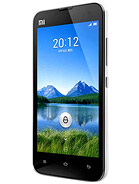
Let's talk about the keys and ports. Below the display you'll find three shiny capacitive buttons for menu, home and back. But, unlike most Android phones these days, Xiaomi didn't implement a backlight this time around. No big deal, perhaps, but it's just not as convenient as what we're used to seeing on most other Android phones these days. Thankfully, there's still an LED indicator -- it's right below the home button instead of next to the earpiece. As for physical keys, they're all on the right-hand side of the phone: there's a volume rocker followed by a power button, both metallic and nicely crafted. It's a slightly weird arrangement compared to most other phones, but we got used to it very quickly.
Hi, I have buy mi 2 8 gb phone in india, now im in colombia, but my phone is not working in here, i have buy a local activated sim in colombia but signal is not working, i have try this sim in other phone it is working fine. But i cant get signanal in my mi2 phone plz suggest.
This phone looks awesome, and the best specs for a phone of this size. Any chance of some more photos of the UI? @Andrew – Yes, the MI3 is forthcoming but not everyone wants a 5″ display, and considers the size of that handset far too big. This MI2 looks just right for me.
@Andrew – Yes, the MI3 is forthcoming but not everyone wants a 5″ display, and considers the size of that handset far too big. This MI2 looks just right for me.
MIUI is also about the small details, some of which have been around for a while. For instance, if you want to move an icon from one home screen panel to another, you can hold your finger on it until it hovers, and then use another finger to scroll to your desired panel. (In fact, if you have one of the latest HTC phones, you can do the same.) You can also organize all the home screen panels by pinching with three fingers on any panel, at which point you'll see a preview of your six to nine panels at a glance, and you can rearrange them or set your main panel as you desire.
XDA Developers was founded by developers, for developers. It is now a valuable resource for people who want to make the most of their mobile devices, from customizing the look and feel to adding new functionality. Are you a developer?

No comments:
Post a Comment