Sony Xperia ZL Review
You will find a 13-megapixel main camera on the back of the ZL, along with an LED flash. Also here are a small speaker and a door that provides access to both SIM card and microSD card slots. The phone's 2,370mAh battery is embedded, however, so it's officially hands-off -- you can't replace it.

This is another area where Sony’s position as a consumer electronics giant comes in handy. The 13-megapixel rear-facing camera benefits greatly from the settings and options culled from the company’s cameras, particularly the Superior Auto mode. It quickly assessed lighting conditions and other factors and switched to the correct mode. If you don’t want to leave it up to Auto, the app offers a ton of scene modes for almost any situation. The Xperia ZL’s pictures are good but not great. HDR mode doesn’t balance out shadows and light as well as the Galaxy S4 or HTC One, and the edges and details aren’t as crisp. Night mode produced surprisingly good pics in low light considering the shutter isn’t very fast. Burst mode increased speed but the moving objects are full of blur. Overall, images are fine for sharing online, though they won’t look all that great on a giant HDTV screen or when printed.

We'd also remind you that the operative term here is "head-on." As with the Xperia Z, the ideal viewing angles on the ZL are considerably narrower than on the Droid DNA and most other devices this size. Look askew at the LCD to any significant degree and colors will quickly wash out, invert or otherwise deviate from their intended hues. We continue to wonder how a company known for pushing the limits of TVs can't crack the mystery of wide viewing angles in mobile when considerably smaller rivals like HTC or ZTE have fared better with screens they frequently outsource to part suppliers.
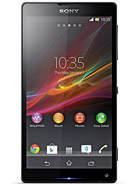
Beyond that, Sony's implementation of their own user interface has proven itself to be swift and responsive as it should be, doing the processor under the hood justice. This Qualcomm SoC also lends itself to a long battery life: more info on that below.
Spin the phone around and you'll find some other elements in familiar and usually easy-to-reach places, including the volume rocker in the top right, the machined-aluminum power button at center right and the headphone jack at top. Unfortunately, this also means that the micro-USB socket is at the top-left corner, rather than the bottom. That may be partly forgiven since there's a two-stage camera button at the bottom right, something we'd sorely missed on the Xperia Z. The 13-megapixel camera on the back (with LED flash) also appears more safely recessed this time, and Sony still manages to stuff in that uniquely bottom-mounted, front-facing 2-megapixel camera despite the narrower chin.
Oh boy! You mean to say sales is directly proportional to design? Samsung Galaxy phones get sold because of three main reasons: The flagship S series' hardware i.e, brutal processing power and the software features that come along. The entry-level and mid-range phones of Samsung are pretty cheap compared to other OEMs' phones making most of the people to opt for them. The smartphone market is flooded with zillion number of variants of Samsung phones. So an average user, who has no technical knowledge, has higher chances of getting a Samsung phone compared to other OEMs. As a matter of fact, the design of Galaxy phones including the flagship S series has always been under scrutiny.
Both Xperia Z and ZL have got MicroSD slot, Smartypants. The hype you mentioned was always about Xperia Z and yes, it does manage to live up to the expectations with its sleek and glassy design, water and dust resistant ability barring the not-so-good camera and poor contrast.
Get the best tech deals, reviews, product advice, competitions, unmissable tech news and more! No spam, we promise. You can unsubscribe at any time and we'll never share your details without your permission.
The speaker on the back pumps surprisingly loud and decent audio for a smartphone, and listening to music via the headphones is a great experience. With the Xperia ZL, Sony is reminding everyone that they once ruled portable music and currently sit atop an entertainment empire. Thus you can easily mirror the phone and the media content on it to a Sony Bravia TV or pair and connect NFC-enabled Sony headphones and speakers with a tap. From within media apps it’s easy to “Throw” a song, image, or movie to another compatible device. In a perfect world all these features would work with any modern entertainment gadget. At least Sony is attempting a unified ecosystem so that their own products work together without hassle.
A key addition for 2013 is Stamina mode, which extends battery life by preventing apps from quietly sipping data while the phone's screen is asleep. You can make exceptions for applications that truly demand real-time updates, whether it's email or a favorite social network, and anything in mid-progress will run until it's finished. Sony's power-management section provides an estimate of just how long you'll last on standby in whichever setting you use, although it's wildly optimistic about the Stamina mode's impact: an estimate of one day and three hours in regular use suddenly jumped to four days and 19 hours the moment Stamina kicked in. Suffice to say that most owners, let alone gadget reviewers, usually won't leave their phones idle for long enough to test those claims.
And it does, in some ways. You just can't ignore a screen density of 443 pixels per inch -- it's a treat when websites look like printed pages, or when HD movies show all their detail. Likewise, you'll see rich colors when viewing things head-on. Sony's Mobile Bravia Engine 2 delivers an additional boost in the gallery, movie and YouTube apps, punching up the saturation, sharpening images and improving contrast. It does occasionally go overboard, however. Tangelo fruit that was already a vivid orange in real life suddenly went neon when Sony's software got ahold of it. There's clearly still some room left for refinement.

No comments:
Post a Comment